Mind The Gap

  • Home
  • About Us
    • Vision & Mission
    • Our Values
    • Who We Are
    • Where We’ve Worked
  • What We Do
    • Conflict Management
    • Ecological Restoration
    • Programme and Project Management
    • Managing Change
    • Community Partnerships and Planning
    • Gender and Diversity
    • Leadership and Personal Development
  • How We Work
    • Our Approach
    • Training
    • Evaluation
    • Facilitation
    • Coaching
    • Research
    • Consultancy
    • Publications
  • Our Clients
    • Current Projects and Affiliations
  • Blog
  • Contact Us

Discarded women in Nakuru – the largest urban settlement in Kenya’s beautiful Rift Valley

18th August 2022 By admin

As Kenya elects a new government, at least one group of the governed are not expecting much change; the young women – single mothers through violence or accident – who scavenge on noxious municipal rubbish dumps. The discarded waste they glean, a metaphor for their own lives and futures. Not just their lives, but those of their infant children, discarded on rubbish dumps, literally and metaphorically on the edges of society. Rejected by their families, and disregarded by a political system, unable and maybe unwilling, to make a difference.

I spent several days around one dump in Nakuru, walking with the people to learn of what they face, covered in flies, filth and stink, digging out what is humiliatingly called “a living.”

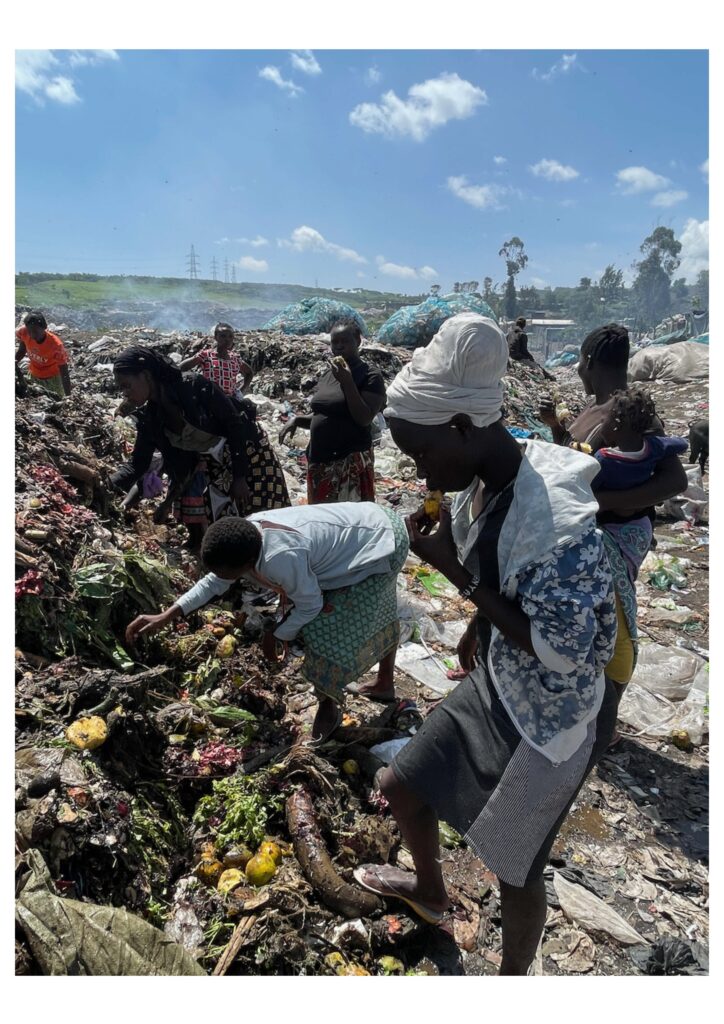
It is unspeakably heart-breaking – shameful for Kenya – to see teenage girls and women with babies and young children scavenging for anything to feed themselves or sell; digging in the worst kind of waste, alongside feral dogs, pigs and toxic smoke fumes, on a huge, stinking rubbish heap. 

Nakuru dump, Kenya.

While there, a refuse truck arrived, spilling food scraps, rotten fruit, private hospital waste, and all manner of residential waste onto the dumpsite. The women rushed over.  A half-eaten pizza quickly stashed away for a child. Fruit – inspected by hands that moments ago sifted through human waste and syringes – had the bad bits spat out. The rest was eaten, or fed into the mouths of the babies on their backs.

An infant’s cardigan covered in poo – a great find – held aloft with a smile – “we will wash it and sell it.” Diapers not fully “used,” bagged up to be washed and used again. Dogs and pigs shushed away until the girls had got the best of the pickings, inured to the heat-soaked stench, the dangers of rummaging through illegally dumped hospital waste that should have been incinerated, and inured to the millions of flies that settle on faces, hands, babies’ mouths and eyes, and on the unwashed food that enters people’s mouths.
Ironically, the dump’s voluntary community leaders have heard of no cases of people dying. Pigs and dogs fall sick. Dead birds? Yes. But the immune systems of the people, like their hope, have been tested beyond measure.

And then there’s the ongoing sexual violence and intimidation. You want to pee at night? Wake your neighbour. Go in twos and threes. Predatory males have raped in groups. “You want food, girl? You know what you must do.” It is frightening and dangerous beyond belief.

I held a meeting with 52 of these young women in a building next to the dump, organised by three amazing women – community leaders on and around the dump site – themselves struggling. Seven of the girls stood up to tell their story. Brave. They had never stood up in public to speak before. Five couldn’t complete their harrowing tale because they broke down. We three visitors were all in tears. The other girls looked on stony faced, in traumatised silence, identifying with their visibly broken sisters.

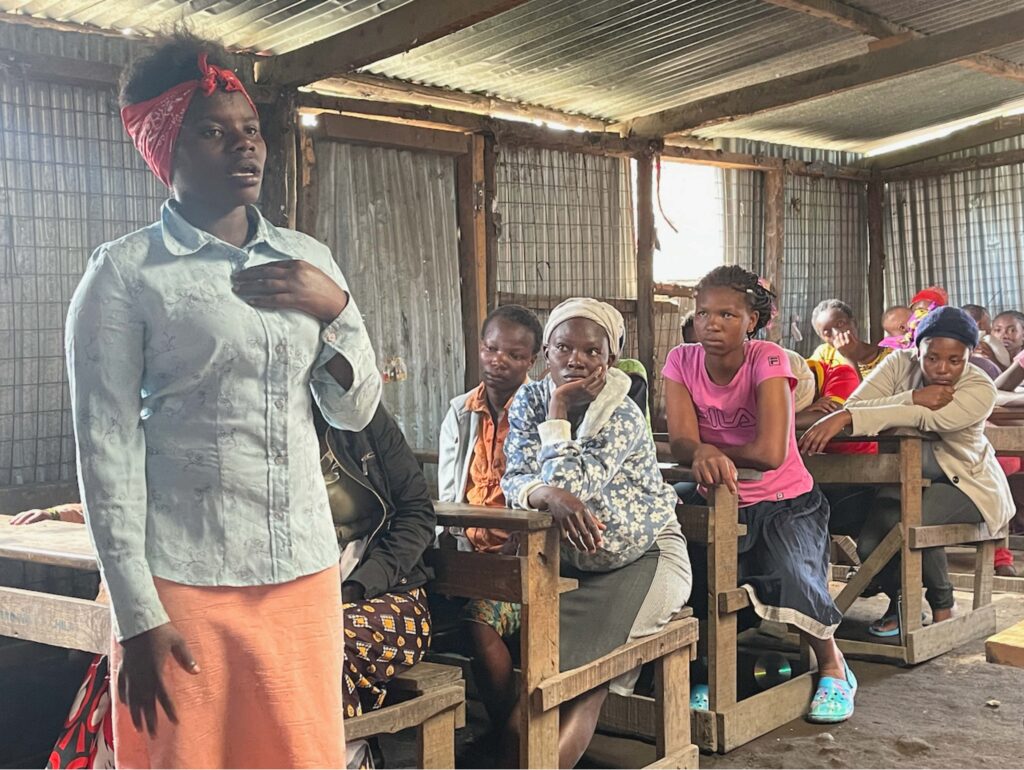
Women gathered to share their harrowing stories.
Seven girls stood to speak, about things they’d never shared before.

This is Nakuru – almost 600,000 people – the largest urban centre in Kenya’s rift valley. A human tragedy virtually un-noticed and unremarked upon, accepted as normal by politicians in their pre-election rallies. Why so?

The voiceless poor, their infant children condemned like their mothers to a life with no prospects, thrown out by parents, ignored by society, unable to vote (most have no papers) and therefore ignored by politicians too.  Deeply traumatised by sexual violence or dreadful family situations, they have almost no support – with anything! Mental health services are shockingly poor; anchored in quasi-religious rituals, antiquated and drugs-biased medical models, or “pull yourself together” stoicism, bordering on denial.

What to do?

Well, some things can be done and are being done. But it is desperately little and it all relies on local volunteers – women mostly – who spend their own money and time doing what they can. There are links to the some concerned individuals in Scotland and small donations help. But plans for training, for a creche, for health care, for mental health services – all are beyond reach as day-to-day survival needs take the priority, and officialdom looks away.

Some of this is structural and needs working on from a wider development perspective. Banning scavenging or having kerbside recycling removes the chance for these people to earn money and deprives them of a social network. For the local volunteers the questions are more immediate – “OK – what can we do right here, right now, given the training and resources at our disposal?”

Not addressing the situation at all is unthinkable. Post-election, political action and engagement with these extremely vulnerable people is desperately needed – to listen, to understand, to develop options with their participation, to broker the difficult decisions, and to develop policies and actions that can actually be implemented.

What is the future for these women and their children? The elections were an irrelevance for them. Their future, their babies’ futures, will come from their own efforts and those of the remarkable volunteers, all too few, who work on their behalf. Unless things change.

—

Dr Scott Jones, co-director

Mind the Gap Research and Training, Creetown, Scotland

www.mind-the-gap.net

Tel: + 44 77 99 11 84 54 | scott@mind-the-gap.net

Associate Professor

International Development / Peace and Conflict Studies

Oslo New University College, Norway

Filed Under: Featured

Connecting and Reconnecting with UNESCO in Thailand

23rd December 2021 By Megan Jones

As 2021 draws to a close, Scott has recently returned from facilitating a large hybrid retreat in Thailand for UN Asia-Pacific Region Education staff. Over 100 people from Turkmenistan to Samoa took part, 30 in-person and 70+ online.

The theme was “connecting and reconnecting” nationally, regionally, and with new plans for delivering on the Sustainable Development Goals. The main focus was on SDG 4: “Ensure inclusive and equitable quality education and promote lifelong learning opportunities for all”. Scott noted:

The energy and commitment of the folks I had the privilege to work with was amazing. There was a real focus on how to deliver in practical ways that worked for local stakeholders and the donor community. Still, at a time when needs are even greater, whether COVID-related or conflict-related (for Afghanistan and Myanmar delegates especially) funding sources seem even harder to locate.”

Scott has written a follow-up report for UNESCO, and guidelines on how to run a large hybrid event. Feel free to reach out to us if you’re curious about how to run this kind of event in your own work.

Check out these useful follow-up references from our partners:

  • 13 December 2021, The State of the Global Education Crisis: A Path to Recovery – https://en.unesco.org/news/state-global-education-crisis-path-recovery
  • Global indicators for SDG 4. http://uis.unesco.org/sites/default/files/documents/11-global-indicators-sdg4-cheat-sheet-2018-en.pdf
  • UNESCO Bangkok website. https://bangkok.unesco.org/index.php/content/unesco-bangkok
Facilitating a hybrid retreat required a mixture of old and new technologies – and a stellar behind-the-scenes team!

Filed Under: Featured, Uncategorised

Balloch Wood community consultation completed

27th July 2021 By Megan Jones

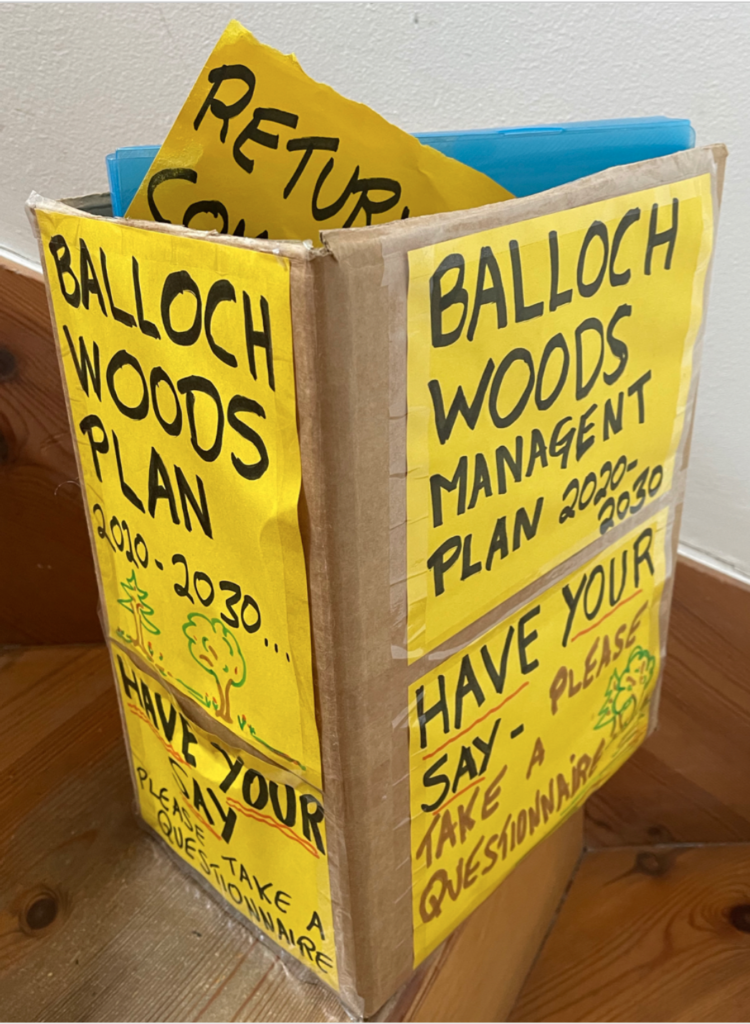
As a voluntary initiative, Mind the Gap recently completed a community consultation to contribute to the Land Management Plan for Balloch Woods being undertaken by Forestry and Land Scotland (FLS).

Balloch Woods are 93 hectares of community woodland behind the village of Creetown, where Mind the Gap has its offices. The three main objectives of the management plan are:

  1. Boosting local community involvement, including issues of access and contributions to people’s health,
  2. Biodiversity goals that include conversion to broadleaf or mixed conifer woodlands, while
  3. Restoring priority habitats such as Ancient and Semi Natural Woodland.

The consultation revealed high levels of community interest in Balloch Wood, appreciation for involvement in the LMP process, and enthusiasm for local engagement in decisions about the Woods. Some of the key takeaways from the consultation included:

  • The woods are very popular and much appreciated. People have a variety of reasons for visiting them – often more than one reason. The main reasons given were to relax and get fresh air; mental health and well-being; and to be with friends or family.
  • The woods are especially appreciated for being safe, local and accessible; for bringing a sense of peace and tranquility; connection to nature; and changing through the seasons.
  • Top priorities for questionnaire respondents were clear. These were: to improve drainage on muddy, wet paths; better information boards/signage; replacing the old bridge; general maintenance and enhancing habitat.
  • People are in broad agreement with the draft Land Management Plan goals and proposals, including:
    • Boosting community engagement and access for people’s health and wellbeing
    • Supporting proposals to remove the dead/diseased larch as soon as is practical
    • Generally favouring native tree species, and
    • Agreeing with FLS’s ambitions for priority habitat restoration and biodiversity.

A big thanks to all those in the village who completed questionnaires or took part in interviews and a focus group, especially given how the consultation was constrained by COVID regulations. Special thanks to friends at the Balloch Wood Community Venture and to FLS staff in Newton Stewart.

To learn more about the consultation and what we found, check out the report here!

Distribution of questionnaires during the community consultation

Filed Under: Featured, Uncategorised

Project Management training from Mind the Gap at this year’s East Africa Cup – sign up now!

2nd June 2021 By Megan Jones

Mind the Gap is pleased to be offering a free online training in project management at the Digital East Africa Cup 2021. Our training is on Designing Successful Projects: A practical introduction to project design and management and will take place on Zoom on Friday 26th June, from 13:00-14:30 EAT. In this training you will learn from Dr. Scott Jones about the essential elements of successful project design, running stakeholder analyses, and determining objectives, risks and indicators for monitoring and evaluation. Register for Mind the Gap’s session and the other EAC 2021 sessions by clicking here.

The East Africa Cup is an annual educational, cultural and social event held end of June in Moshi, Tanzania (and online during COVID-19). It currently involves 500–2000 youth participants and more than twenty organizations from up to nine countries, including South Sudan, Somalia/Somaliland, Kenya, Tanzania, Uganda, Mozambique, Rwanda, Burundi, and Zambia.

The EAC provides a platform for cultural exchange, education and training in life skills to help young people understand their own potential to make a difference. These skills reflect the daily challenges young people – both able and disabled – face in their own respective environments. And the EAC provides a showcase of the various approaches to using sports and culture as a development tool in a deeply engaging and successful cross-cultural context.

Sessions at the EAC 2021 are based on the fundamental understanding that culture can be a tool for awareness-building and bridge-building between cultures. Other sessions besides Mind the Gap’s project management training include leadership training, conflict resolution, child protection, poverty issues, urban and rural (including making agriculture cool!) youth challenges, interfaith dialogue, inclusion of disabled in community development, media training and use of social media, film and animation, training in use of cartoons, cultural tools (drama, dance, music), HIV Aids awareness and WASH (hygiene/clean water etc.). Sports-specific sessions include coach training, referee training and first aid/sports medicine, both preventive and curative.

Filed Under: Featured, Uncategorised

Register for upcoming free webinars through the 2021 East Africa Cup

19th May 2021 By Megan Jones

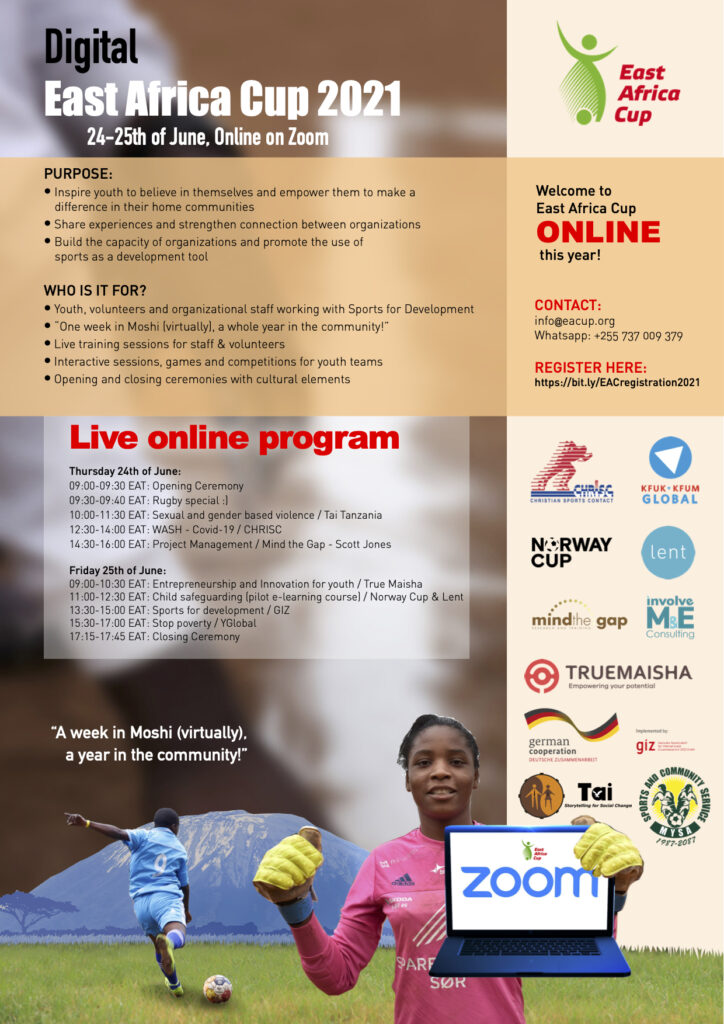
For a second year in a row, Mind the Gap is pleased to be volunteering to support the East Africa Cup, an annual event supporting youth development and leadership by engaging communities and young people in sport. The EAC is online to accommodate the COVID-19 pandemic, and Mind the Gap will be contributing a free Zoom session on Project Management. All events will take place on Thursday and Friday on 24-25 June. If you or your organization want to learn more about project design, stakeholder analysis, monitoring and evaluation, and other aspects of the project cycle, join us!

This year’s full EAC program can be found below, and includes sessions on entrepreneurship, stoping poverty, ending gender-based violence, and interactive sessions, games, and competitions for young people. You can sign up for any or all sessions, including Mind the Gap’s, by registering here.

A “normal” year for the East Africa Cup.

Please feel free to share the programme with others working in this field, and check out the EAC on their Facebook page.

Filed Under: Featured, Uncategorised Tagged With: Africa, community development, East Africa, leadership, project management, sport, webinar, youth empowerment

  • 1
  • 2
  • 3
  • 4
  • Next Page »

Recent Posts

  • Discarded women in Nakuru – the largest urban settlement in Kenya’s beautiful Rift Valley
  • Connecting and Reconnecting with UNESCO in Thailand
  • Balloch Wood community consultation completed
  • Project Management training from Mind the Gap at this year’s East Africa Cup – sign up now!
  • Register for upcoming free webinars through the 2021 East Africa Cup

Title Three

Lorem ipsum dolor sit amet, consectetur adipiscing elit. Aenean id rhoncus massa.

Read More »

Gallery

Gallery

Get in Touch

Email: susan.akoya@mind-the-gap.net

UK Tel: +44 (0)7799 118454
US Tel: +1 541 286 8226

Copyright ©2026 Mind the Gap